

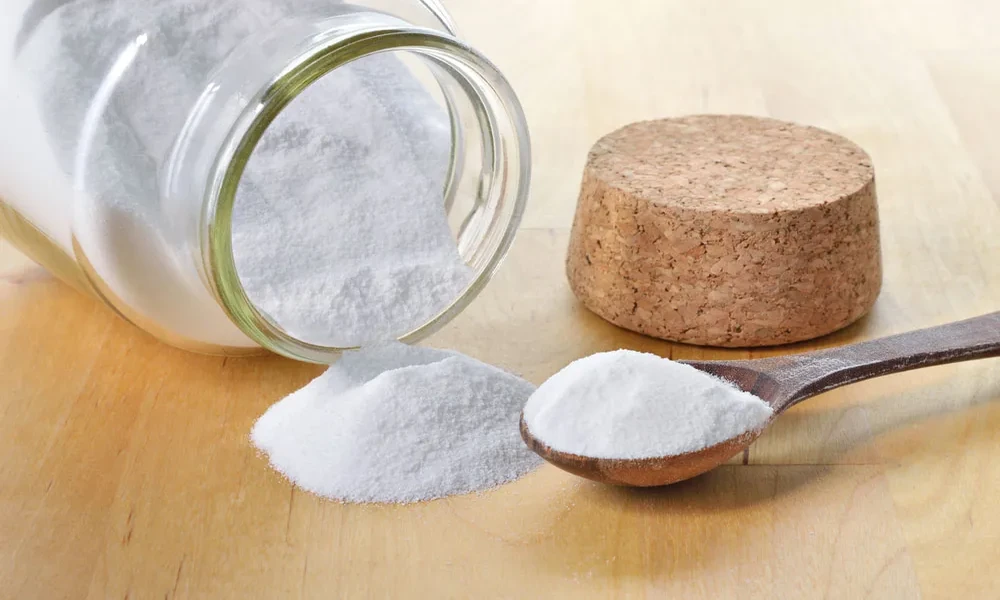
Sodium bicarbonate is among the most versatile and widely used chemical compounds in food production, pharmaceuticals, water treatment, and industrial processing. Its dual function as a leavening agent in baked goods and as a pH regulator in diverse industrial and nutritional applications makes sodium bicarbonate chemical supply a requirement across sectors as different as the artisan bakery and the municipal water treatment plant. Understanding the different grades of pure sodium bicarbonate, how sodium bicarbonate food additive specifications differ from industrial grades, and the specific role of sodium bicarbonate as a mineral additive for drinking water helps procurement teams and formulators identify the right grade for each application.
What is sodium bicarbonate chemical?
Sodium bicarbonate chemical (NaHCO3, CAS 144-55-8) is a white crystalline powder produced commercially through the Solvay process or the natural trona mineral route. It is weakly alkaline in solution, with a pH of approximately 8.3 at typical use concentrations, and it decomposes on heating to produce carbon dioxide, water, and sodium carbonate. This thermal decomposition is the basis of its function as a chemical leavening agent in baked goods, where the carbon dioxide produced creates the bubble structure that gives bread, cakes, and biscuits the characteristic texture.
Sodium bicarbonate is a globally recognised food additive with designations including E500ii in European food additive classification and INS 500ii in the Codex Alimentarius. Its GRAS (Generally Recognised as Safe) status in the United States and its inclusion in the food additive positive lists of regulatory authorities in India, Europe, and other major markets reflect its well-established safety profile across a wide range of food applications.
What are the grades of sodium bicarbonate and how do they differ?
Sodium bicarbonate product grades differ primarily in purity, particle size, and the manufacturing and testing standards applied during production:
- Food grade: produced to the specifications of applicable pharmacopoeia or food chemical codex standards, with strict limits on heavy metals, arsenic, and other contaminants. Sodium bicarbonate food additive for direct incorporation into food products must meet food grade specifications, which require purity of 99 per cent or above and compliance with the specific impurity limits that food safety regulations impose
- Pharmaceutical grade: produced to pharmacopoeial standards (BP, USP, IP) for direct use in pharmaceutical formulations, including antacid preparations, effervescent tablets, and intravenous sodium bicarbonate solutions for acidosis treatment. Pharmaceutical grade carries additional testing requirements for specific impurities and the batch documentation that GMP manufacture requires
- Technical grade: produced for industrial applications including fire suppression, textile processing, and chemical manufacturing, where the purity and impurity profile requirements are less stringent than food or pharmaceutical grade. Technical grade sodium bicarbonate chemical is not appropriate for food or pharmaceutical applications
How is sodium bicarbonate used as a food additive?
As a sodium bicarbonate food additive, its primary function in food manufacture is chemical leavening in baked goods. It is used alone or in combination with acidic ingredients, including cream of tartar, sodium acid pyrophosphate, or citric acid, to generate carbon dioxide through acid-base reaction. The rate and timing of CO2 generation is controlled by the choice of acid partner and the baking temperature, giving formulators the ability to tailor the leavening profile to the specific product’s texture requirements.
Beyond leavening, sodium bicarbonate product is used in food manufacturing as a pH regulator to adjust the acidity of food systems, as a buffering agent in beverages, and as a processing aid in cocoa processing (Dutching), where it raises the pH of cocoa powder to produce a darker colour and milder flavour than natural cocoa.
What is the role of sodium bicarbonate as a mineral additive for drinking water?
Mineral additives for drinking water serve to restore or enhance the mineral content of treated or purified water, improving taste acceptability and providing specific mineral contributions that consumers expect from mineral water. Sodium bicarbonate is used in water mineralisation for several purposes:
- Alkalinity and bicarbonate content: natural mineral waters derive the characteristic taste partly from the bicarbonate content. Adding sodium bicarbonate to purified water restores a portion of this bicarbonate alkalinity, improving the water’s taste profile and mouthfeel
- pH adjustment: pure sodium bicarbonate raises the pH of treated water whose pH may have been depressed by the treatment process, bringing it within the slightly alkaline range that characterises most natural mineral waters
- Scale inhibition in distribution infrastructure: the bicarbonate alkalinity maintained by sodium bicarbonate addition helps protect distribution system components from corrosive water, which is particularly relevant in soft water areas where low alkalinity increases metal leaching risk
Sodium bicarbonate chemical, pure sodium bicarbonate, and sodium bicarbonate food additive serve applications spanning food manufacture, pharmaceuticals, drinking water mineralisation, and industrial processing. The grade selection, purity specification, and documentary requirements appropriate for each application determine the correct sourcing criteria for procurement teams.
Manufactures and supplies sodium bicarbonate chemical, pure sodium bicarbonate, sodium bicarbonate food additive, and food-grade sodium bicarbonate product for food, pharmaceutical, and water treatment applications. The food grade sodium bicarbonate meets applicable food safety specifications with full lot documentation and quality certification. It also supplies mineral additives for drinking water including sodium bicarbonate for water mineralisation and pH adjustment applications.
